
VOICE REGISTERS
Your vocal cords are two muscular folds that connect from the inside front to the inside back of your larynx. The larynx, made up of cartilage, ligaments and muscle, rest on top of the trachea (windpipe). Your vocal cords are designed to execute different coordinations to accommodate the different registers. When you sing in chest, for example, your cords are at their longest and thickest position. As you ascend, your cords should zip up, making the vibrating surface shorter and thinner. That's how the high notes are accessed—not by stretching, straining or pushing the chest voice.
This "zipping up" action is great news for singers who are frustrated with their range, want to sing with greater freedom, or whose voices tire too quickly. In other words, pretty much everyone! Remember, your singing range -both high and low is limited much more by the lack of knowledge than by lack of talent.
CHEST VOICE
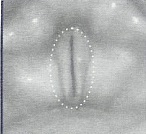
This is your heaviest register; the cords are vibrating along their entire length. It's called "chest" simply because you should feel the resonance predominantly in the chest. Place your hand on your sternum and sing a rich, full "ahh."
HEAD VOICE
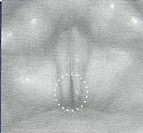
This is the highest part of your natural range. The cords zip up about 2/3 of their length, leaving 1/3 to vibrate. You should feel the resonance primarily in you head. Place a hand on the back of your head near the neck and sing a light, hooty "hoo."
WHISTLE VOICE
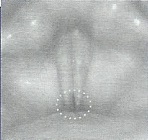
While found primarily in the female voice, whistle (or flageolet) register can be developed in both male and female voices. You can see here that the vocal cords zip up nearly their entire length, leaving just a small opening free to vibrate.
FALSETTO VOICE
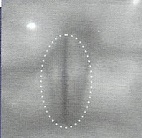
This is the lightest of all vocal coordinations. The cords are long and only the outer borders vibrate, thus producing a "false voice." Falsetto differs from head voice in that it lacks depth and color.
"Genius is the ability to reduce the complicated to the simple."
C.W. Ceran