PLACEMENTS
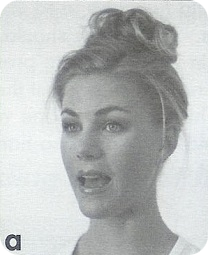
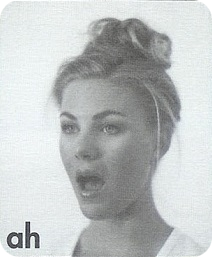
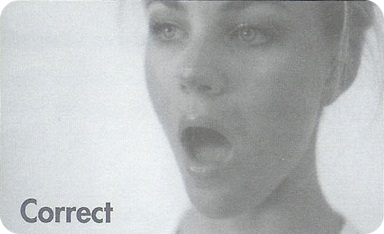
Correct
Loose Facial Muscles on Vowels a (face), oh (gold), ah (father)
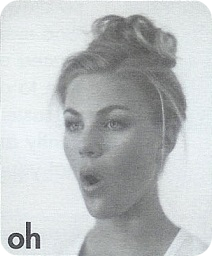
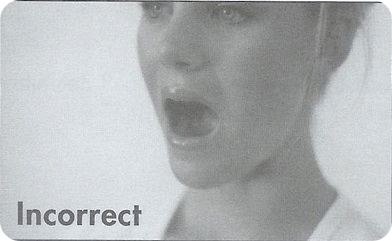
Incorrect
Tight Facial Muscles on Vowels a (face), oh (gold), ah (father)
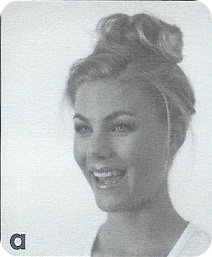
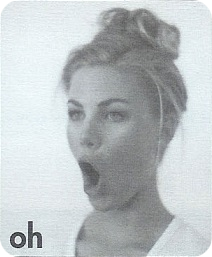
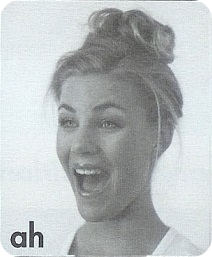
Tight facial muscles equal a tight throat. The longer you sing in this condition, the weaker the muscles inside the larynx become. This gives preference to the development of the outer muscles of the larynx causing numerous vocal dysfunctions.
FIXING OUTER MUSCLES
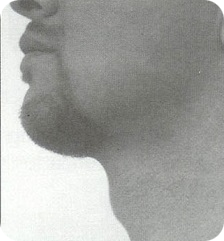
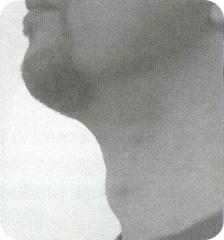
I. Jaw Jutting
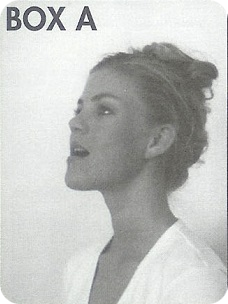
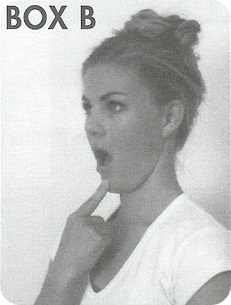
Jaw jutting is the act of protruding the jaw forward creating excess tension and introducing the outer muscles of the larynx into tone production (see BOX A). To fix this habit, do the exercises on an open "ah" sound while gently holding the jaw back as in BOX B.
2. Digrastic Muscles
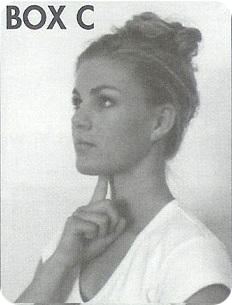
These are the muscles under the chin (see BOX C). They, along with several other muscles, are activated in the process of swallowing, but should never be used in the tone making process. The fingers should be placed under the chin with moderate pressure to give a slight resistance against the digrastic muscles. This should be done very gently and you should never press so hard that you actually feel pain.
3. Larynx Positions
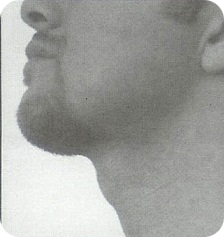
Incorrect Correct Incorrect
High (swallowing) Medium (normal resting position) Low (yawing)
TONGUE
A. Tip of Tongue resting on the back of the bottom front teeth.
B. Tongue resting somewhat flat with slight groove on vowels "a" (cat), "eh" and "ah"
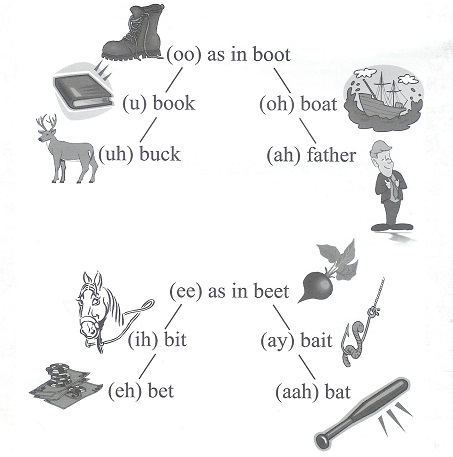
VOWEL TREE
Below is a visual example of how every vowel proceeds from either 'oo' or 'ее.' The explanation of the significance of this fact will be explained in lessons.