RESONATORS
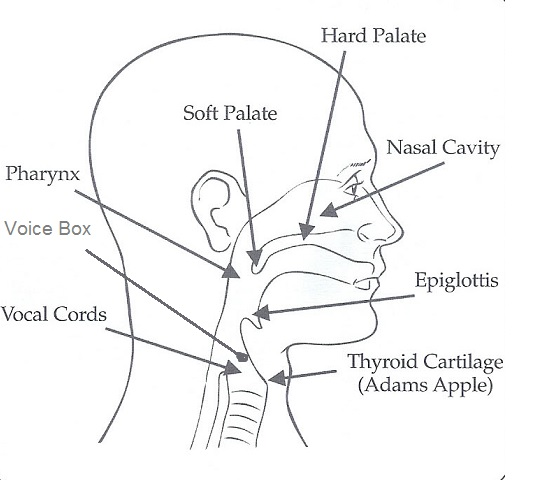
Your soft palate hangs down as a natural divider between the mouth and sinus cavity. If it hangs too low, the tone may be too nasal. If it is lifted too high, preference is shown to the mouth as a resonator, making it difficult to sing in your head voice. Try this: raise your soft palate (like you're swallowing an egg) and read this paragraph out loud. Yep. You sound pretty goofy. That's not your natural voice - it sounds too "hooty" and phony. If you don't use a phony sound when you speak, would it make sense to do so when you sing?
So before the sound formed by your vocal cords reaches the ears of your audience, it is transformed and amplified by the spaces above your larynx - namely, the pharynx (throat), the mouth and the sinuses (nasal cavities). These three areas that make up your vocal tract form a resonant trinity with each space favoring certain frequencies. Because the shape of your resonance system is unique, your voice is different from that of anyone else. Therefore it is a huge mistake to try to copy someone's voice. Use your own voice! We can help you to find it.
The picture below illustrates your resonators anatomy.
"It's v/hat you learn after you know it all that counts"
John Wooden